Satellite-based Crop Health Monitoring

NDVI Data Stories

Version 1.2

- Populated 6 state cards: Punjab, Uttar Pradesh, Rajasthan, Chattisgarh, Karnataka, Haryana.
- Added reference links for each state card.
Read Story

NDVI (Normalized Difference Vegetation Index):
THE SECRET LANGUAGE OF PLANTS

How It Works

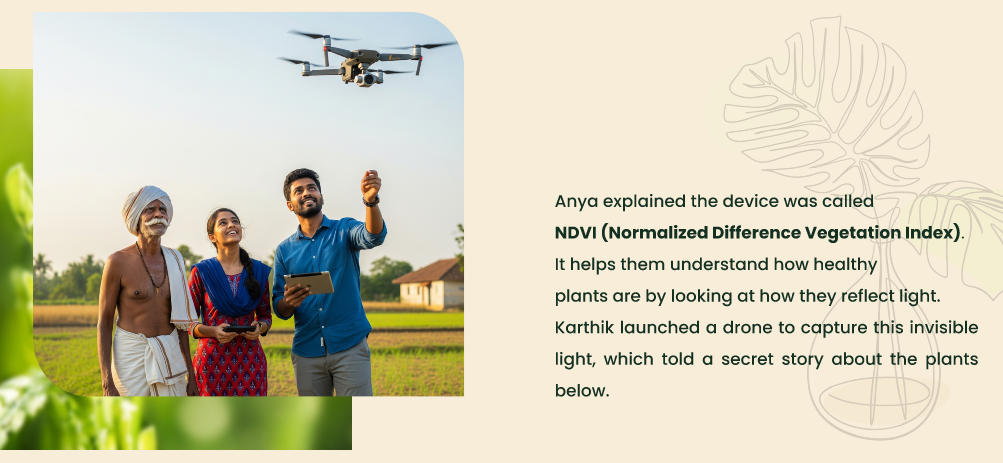
NDVI, or Normalized Difference Vegetation Index, works by measuring how plants interact with Red and Near-infrared (NIR) light.
Healthy, chlorophyll-rich plants absorb red light for photosynthesis and reflect NIR light efficiently.

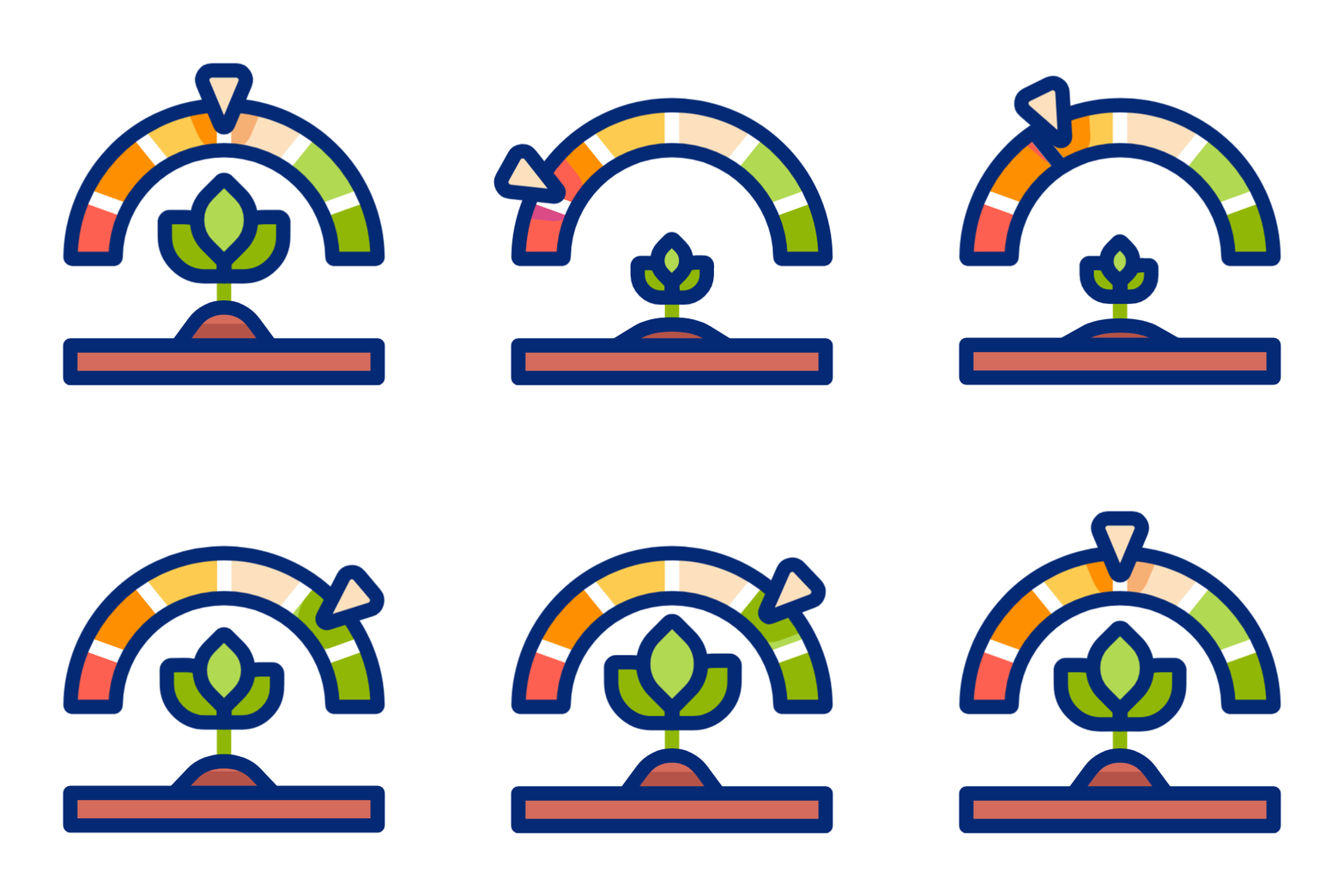
Gauge Icon

NDVI

(NIR - RED) / (NIR + RED)

The Formula And Output

This Formula Produces A Value Ranging From -1 To +1.

-1
NON VEGETATION
0
STRESSED PLANTS
+1
HEALTHY VEGETATION

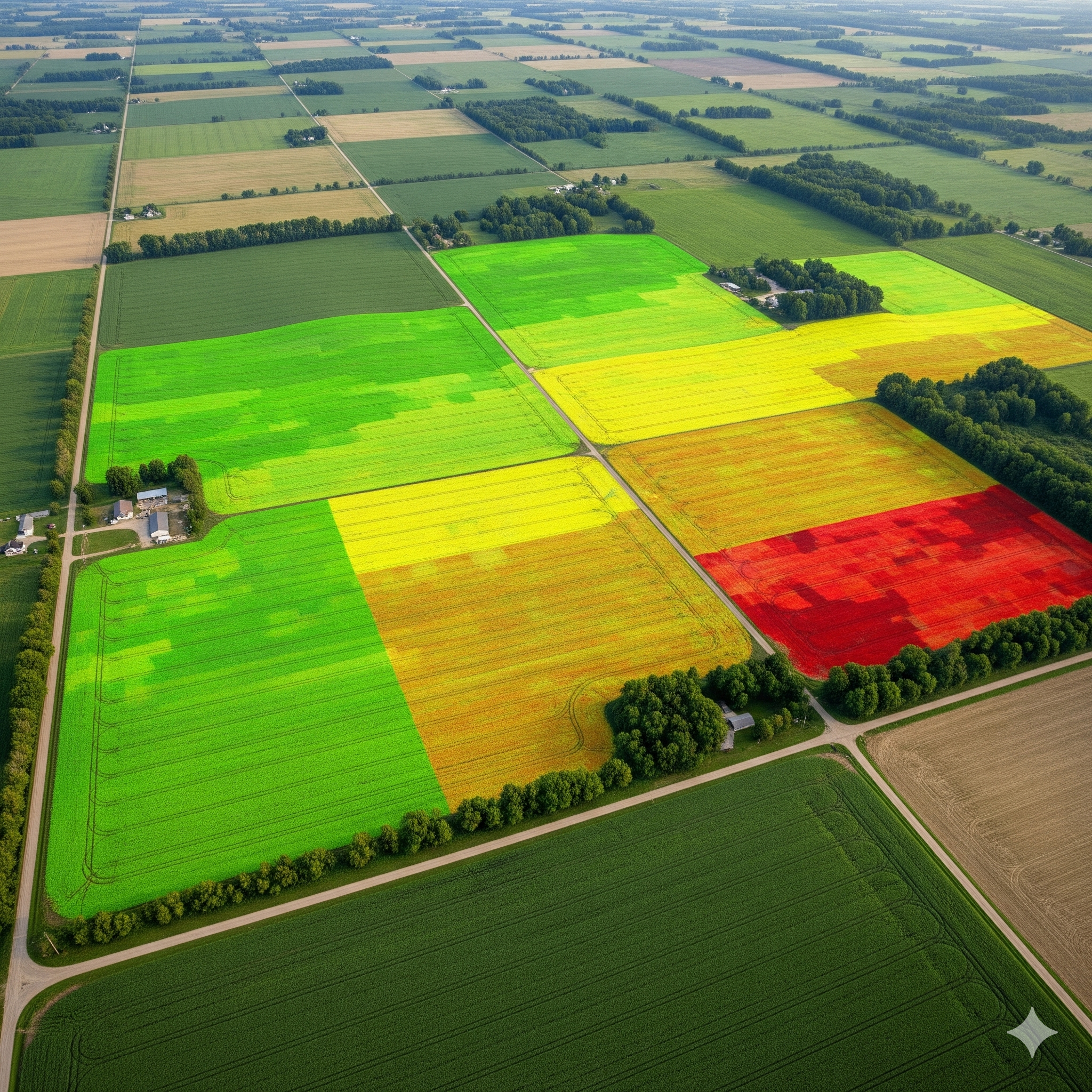
THE NDVI COLOR MAP

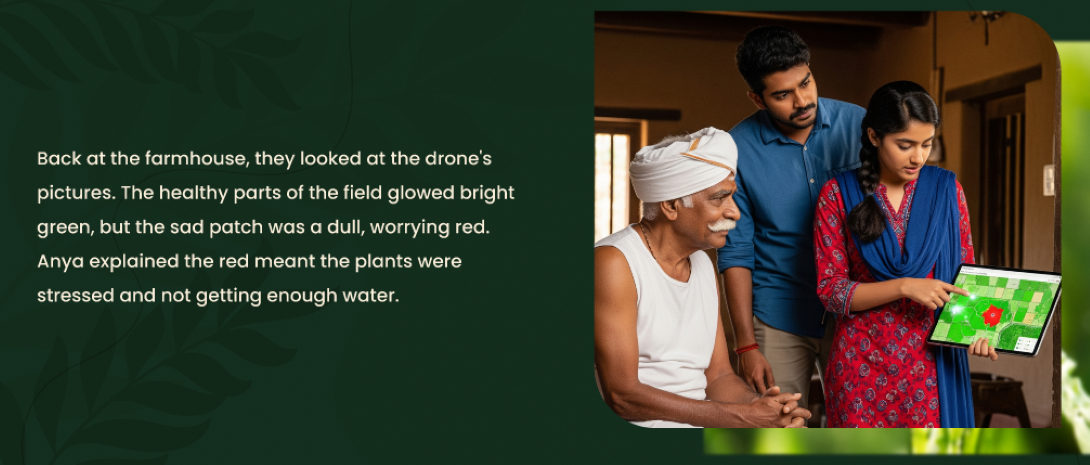
This is what a special camera sees when it looks at a field. Each color on the map tells a story about the plants' health.

Dark Green: Healthy

Range: 0.6 – 1.0

A high NDVI value means the plants are healthy and full of chlorophyll.

Yellow-Green: Stressed

Range: 0.2 – 0.6

This value indicates plants are under stress, possibly from a lack of water or nutrients.

Orange: Unhealthy

Range: 0.0 – 0.2

Low NDVI values suggest vegetation is weak, unhealthy, or sparse.

Light Yellow: Bare Soil

Range: -1 – 0.0

Bare soil, dry areas, or non-vegetated surfaces produce very low NDVI values.